What we treat / Jowls and a softening jawline
Jowls and a Softening Jawline
A jowl is the point where the lower face loses its edge. Skin and fat that used to sit along the jawline slide forward of it and break the clean line between face and neck. Lifting it means putting that tissue back where it was and giving it something to hold onto, which is what threads do. Volume restored higher in the cheek is what stops it returning as quickly.
Why it happens
The jawline is held by fat pads in the cheek and by the fascia beneath them, which is the sheet of connective tissue that wraps the face the way a girdle does. As the fascia relaxes and the pads descend, that weight arrives at the jawline and settles just in front of the chin.
This is why treating the jowl by itself tends not to hold. The slack begins higher up the face, so a lift that lasts starts above the problem and the jawline follows.
How Dr. Mauer treats it
The main treatment
Thread Lifts
Absorbable threads placed deep through a cannula, lifting the tissue and holding it while the body lays down collagen along the track. Dr. Mauer places every thread himself, and his patients describe the result as continuing to improve for months after the appointment.
Read about thread liftsUsually alongside
Dermal Fillers
Volume higher in the cheek so the lift has something to sit against. Restoring what is above the jawline is what makes a lower face look lifted rather than pulled.
Read about dermal fillersWhat to expect
- Appointment
- 60 to 90 minutes
- Discomfort
- Local anesthetic first
- Downtime
- Swelling and a tight feeling for several days
- Visible
- Immediately, then improving for 8 to 12 weeks
- Lasts
- 12 to 18 months for most people
Results for this concern
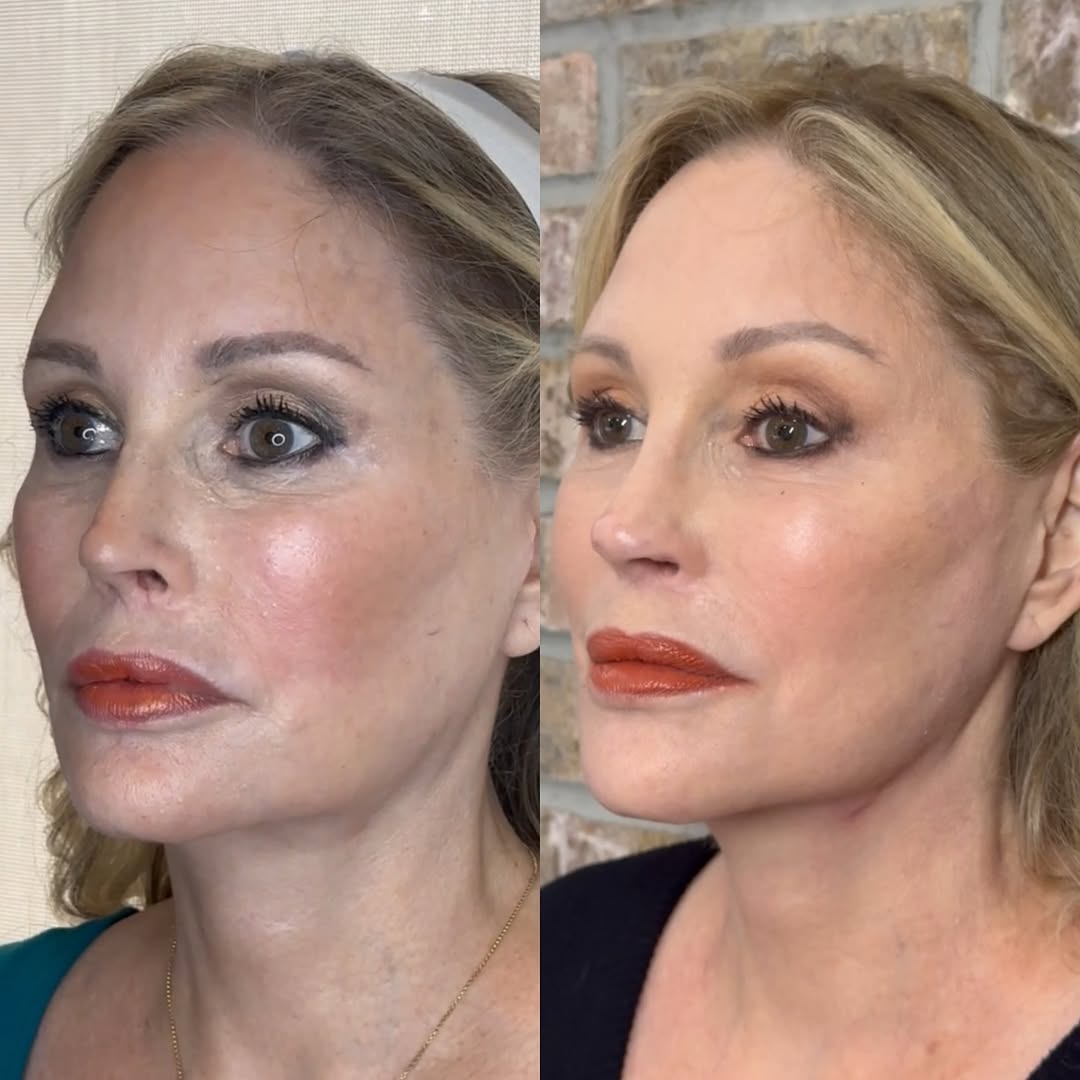
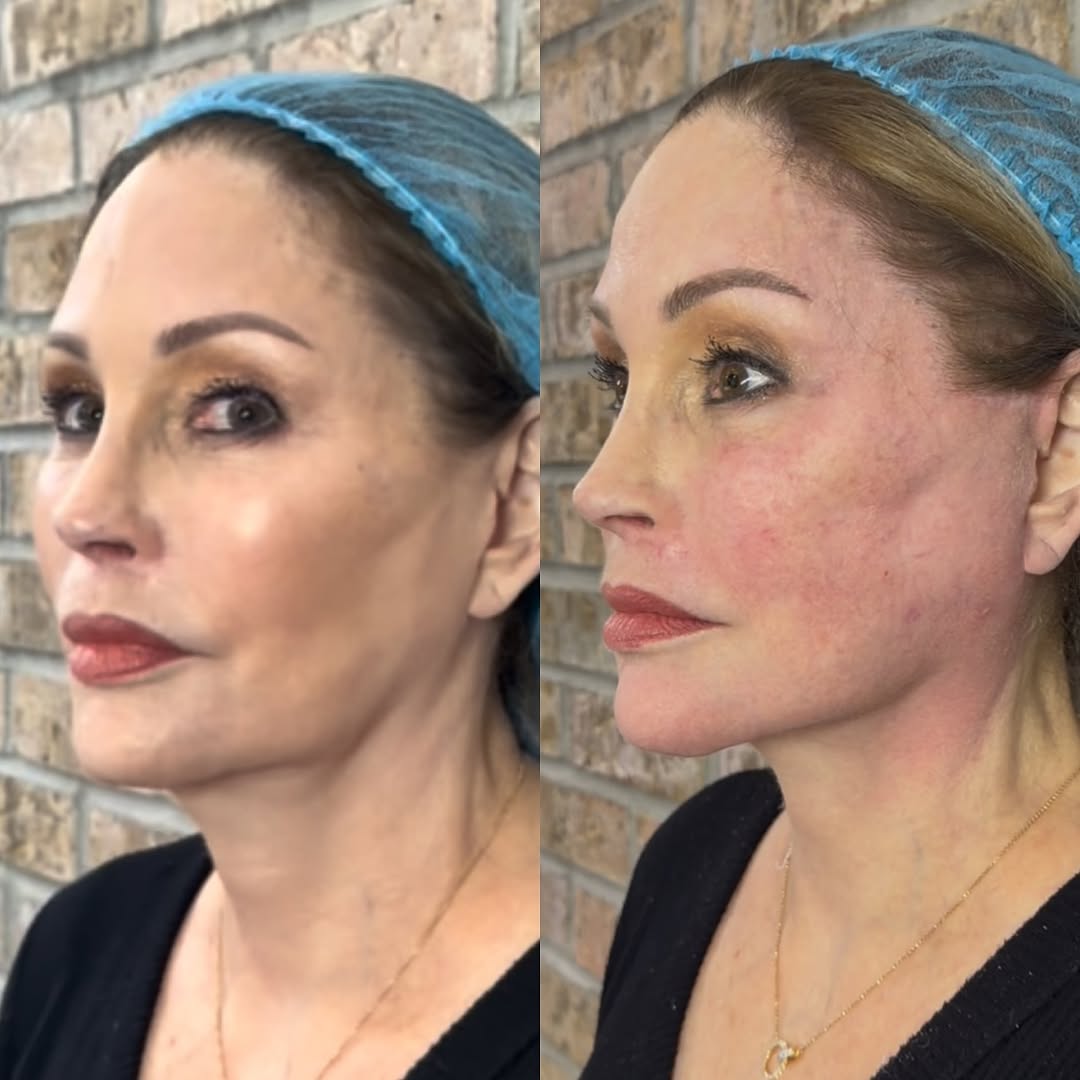
Individual results vary. Photographs are published only with each patient’s written consent.
Questions about jowls and a softening jawline
How is this different from a facelift?+
A facelift is surgery. It removes skin, repositions tissue under general anesthetic, and lasts far longer. A thread lift works through a needle puncture, takes about an hour, and suits a jawline that is beginning to soften. Dr. Mauer will tell you at the consultation if your face has gone past what threads can do for it.
What are the threads made of?+
They are absorbable sutures from the same family of material used to close surgical wounds, and they dissolve over months. What stays behind is the collagen your body lays down along the track.
Is this the thread lift people see going wrong online?+
The videos that gave threads their reputation are usually a shallow placement aimed at lifting the brow. What Dr. Mauer does is a deep placement through a cannula, along the lines the face actually falls in, aimed at the jawline and the neck. One of his patients, a physician herself, describes the difference in her review.
Can I go back to work afterward?+
Most people take a few days. There is swelling and a tight feeling that eases through the first week, and most patients leave a couple of weeks before an event.